Closing the gap to the
AI frontier.
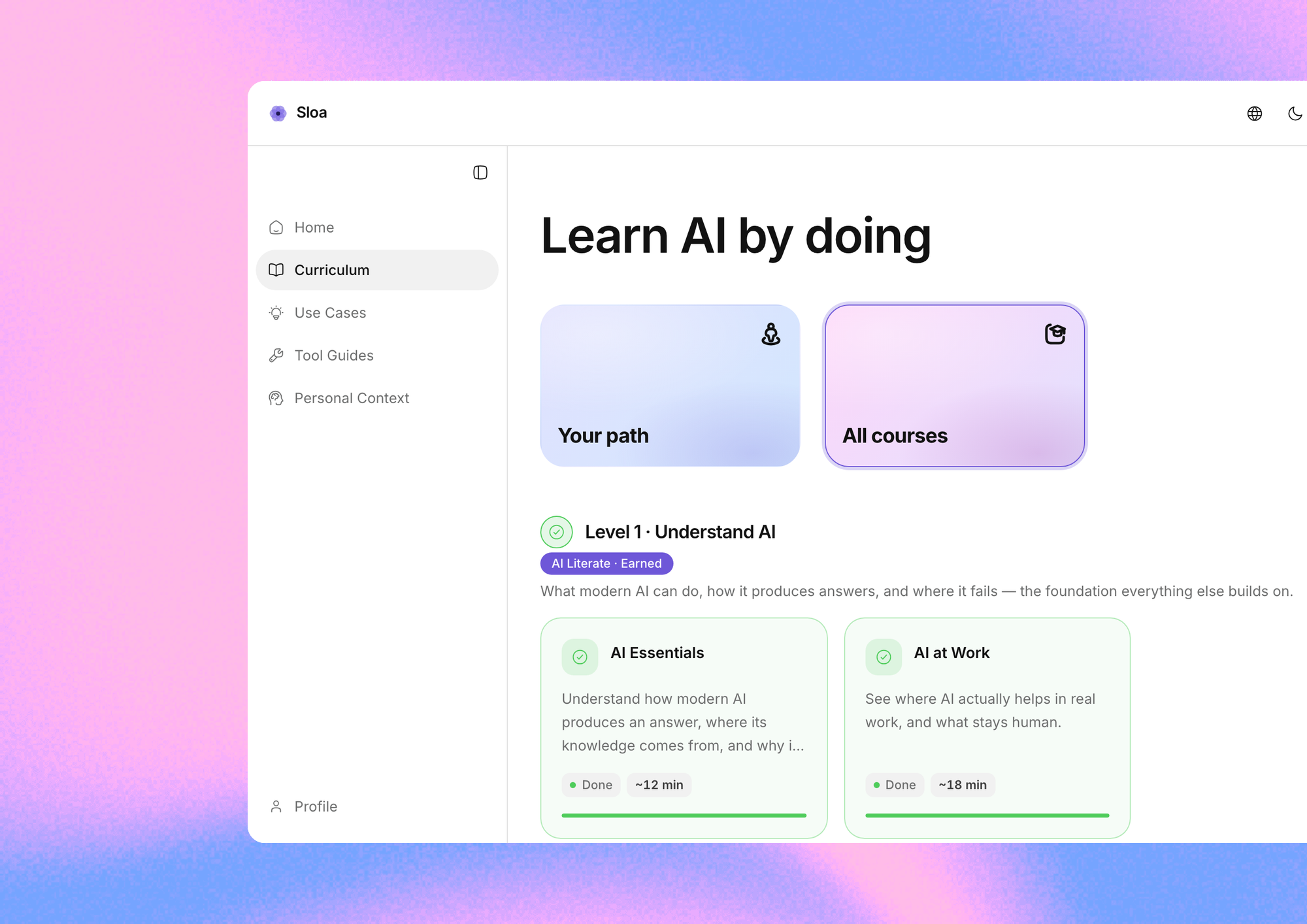
Sloa is the adaptive learning platform that helps people and organizations understand, use and build with AI.
Adaptive learning
AI capabilities are advancing faster than most people can learn to use them.
Sloa adapts to your existing knowledge, goals, role and progress.
A structured competency framework defines where every learner should arrive, while the adaptive system works out the most effective way to get there.
Supported by




01
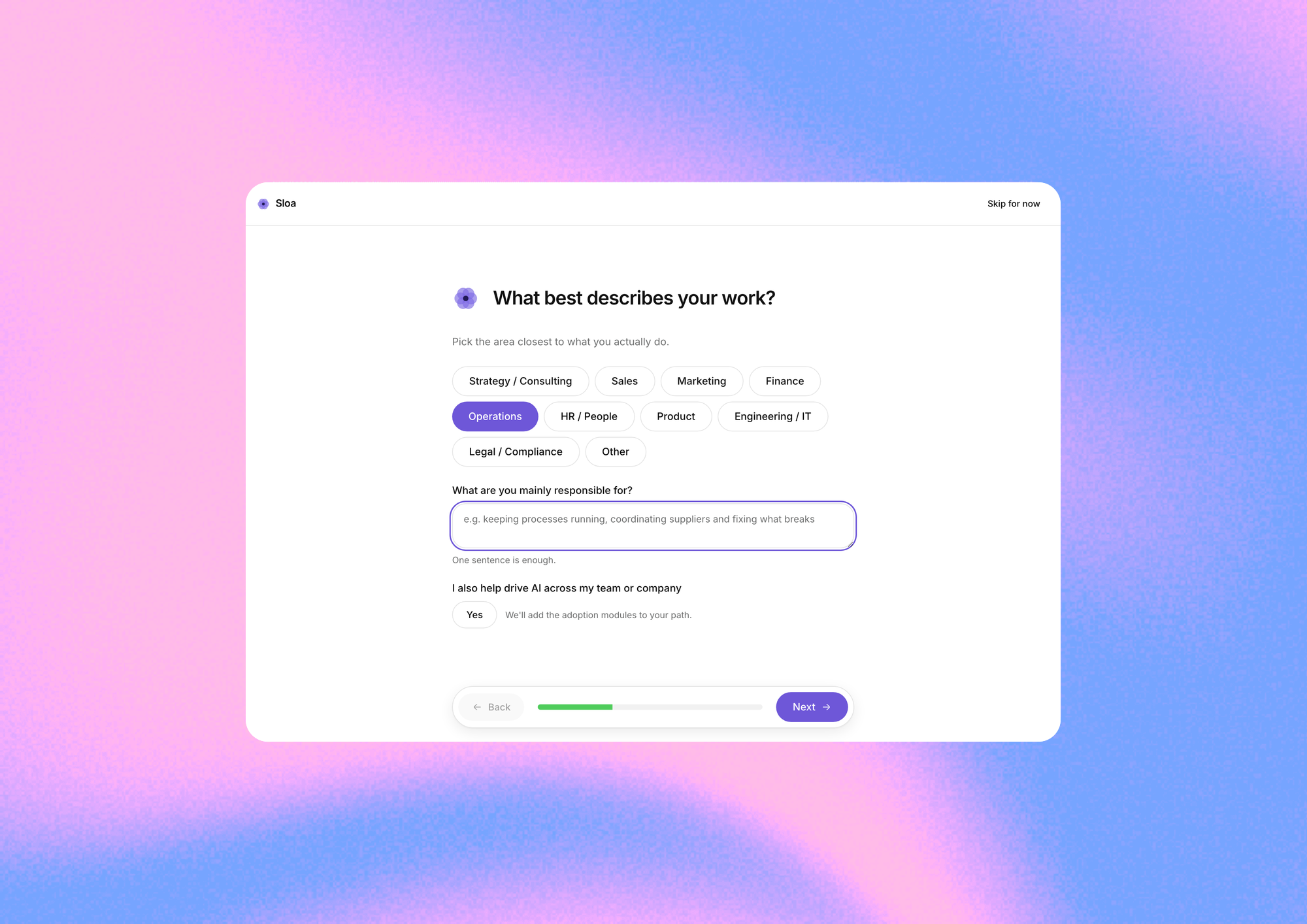
Find Your Level
Sloa asks you questions to find out your current level and understanding of AI.
02
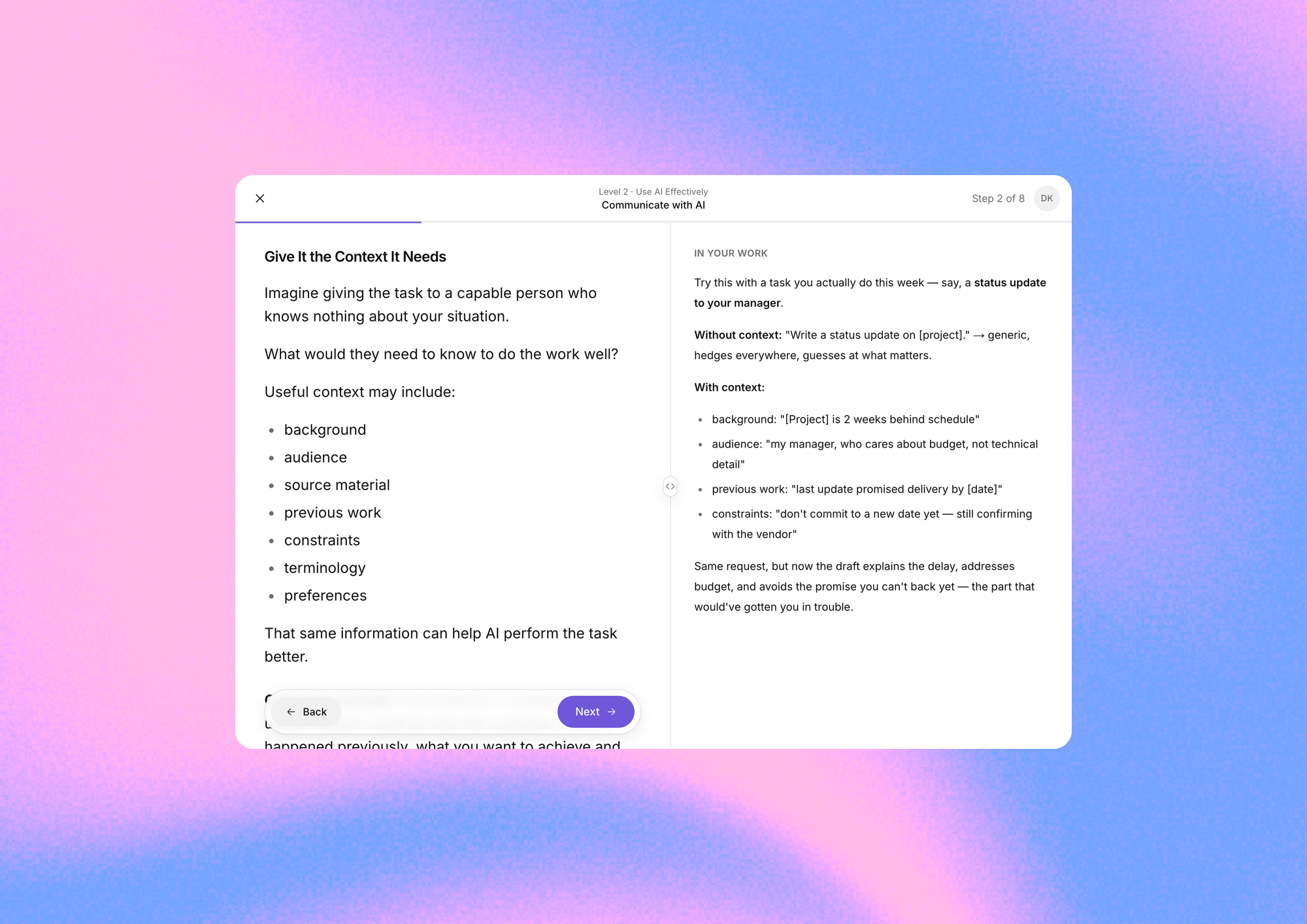
Understand
Concise explanations, diagrams and visual frameworks for the concepts that actually matter — how models generate output, where they fail, and why.
03
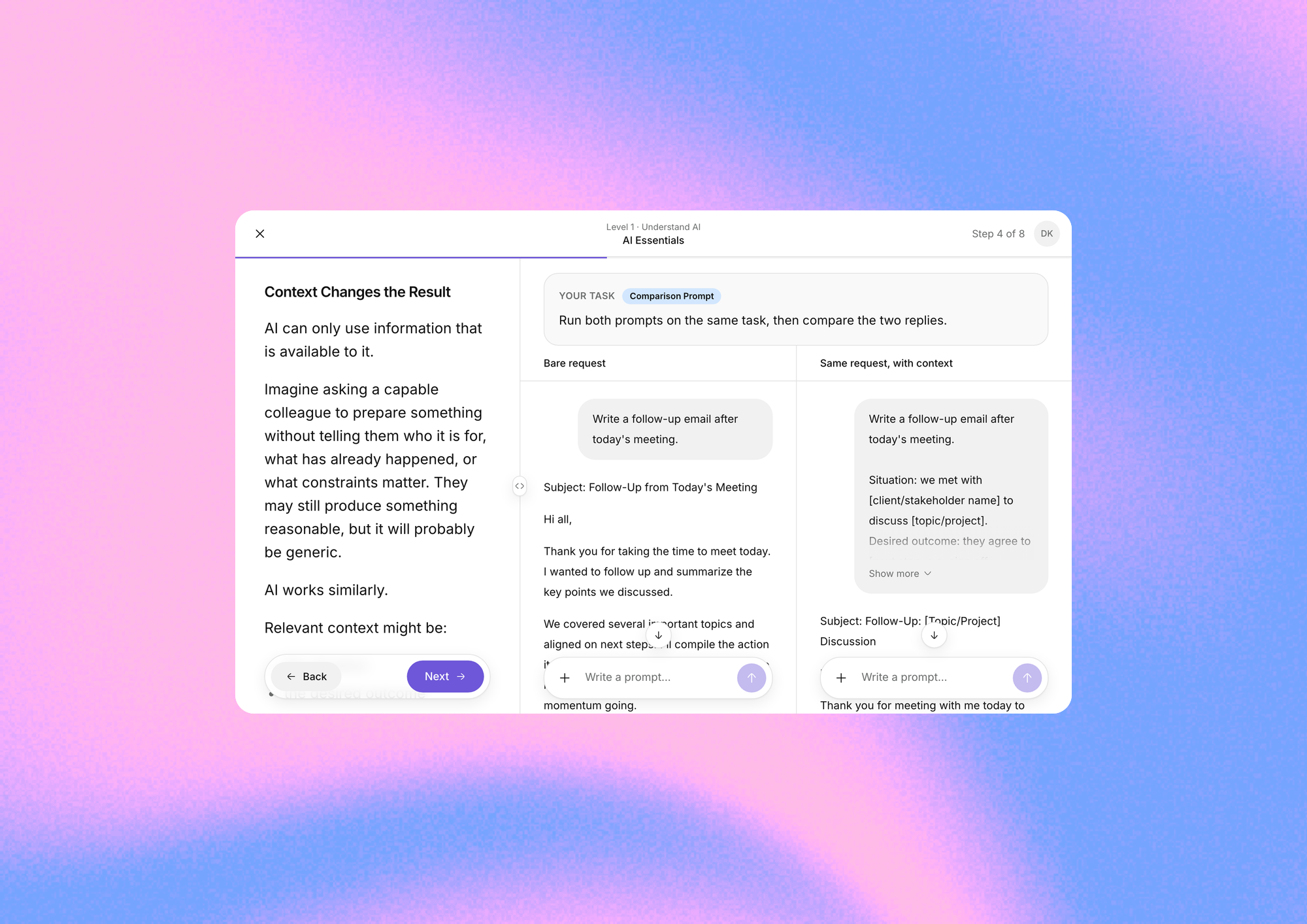
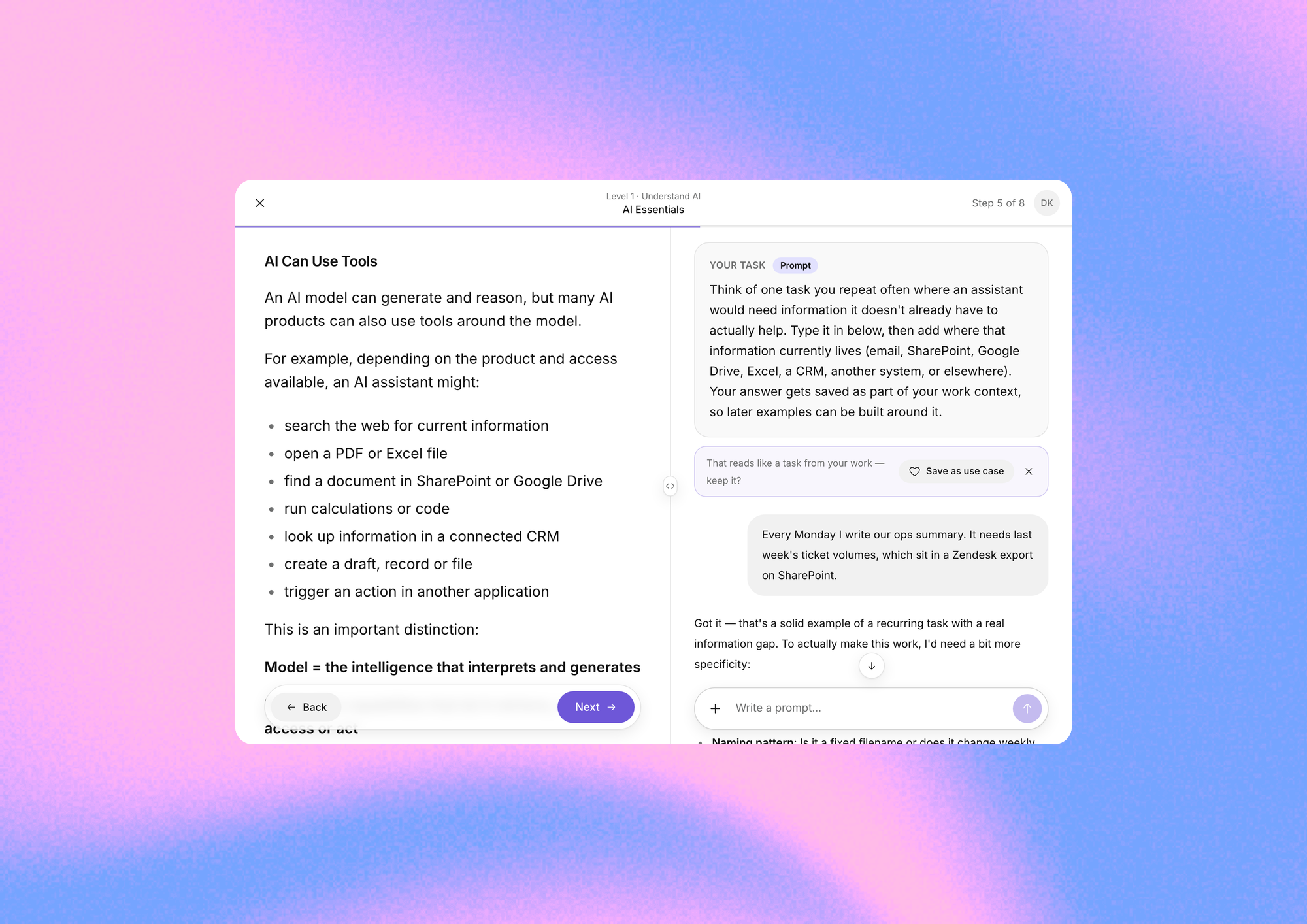
Practise
Work directly with AI inside the learning environment. Improve a weak prompt, analyze a document, design a retrieval system — then get feedback on the process, not just the result.
04
Apply
Turn understanding into practical tasks tied to your role, your industry and the work you actually do, so the capability transfers.
How does Sloa work for organizations?
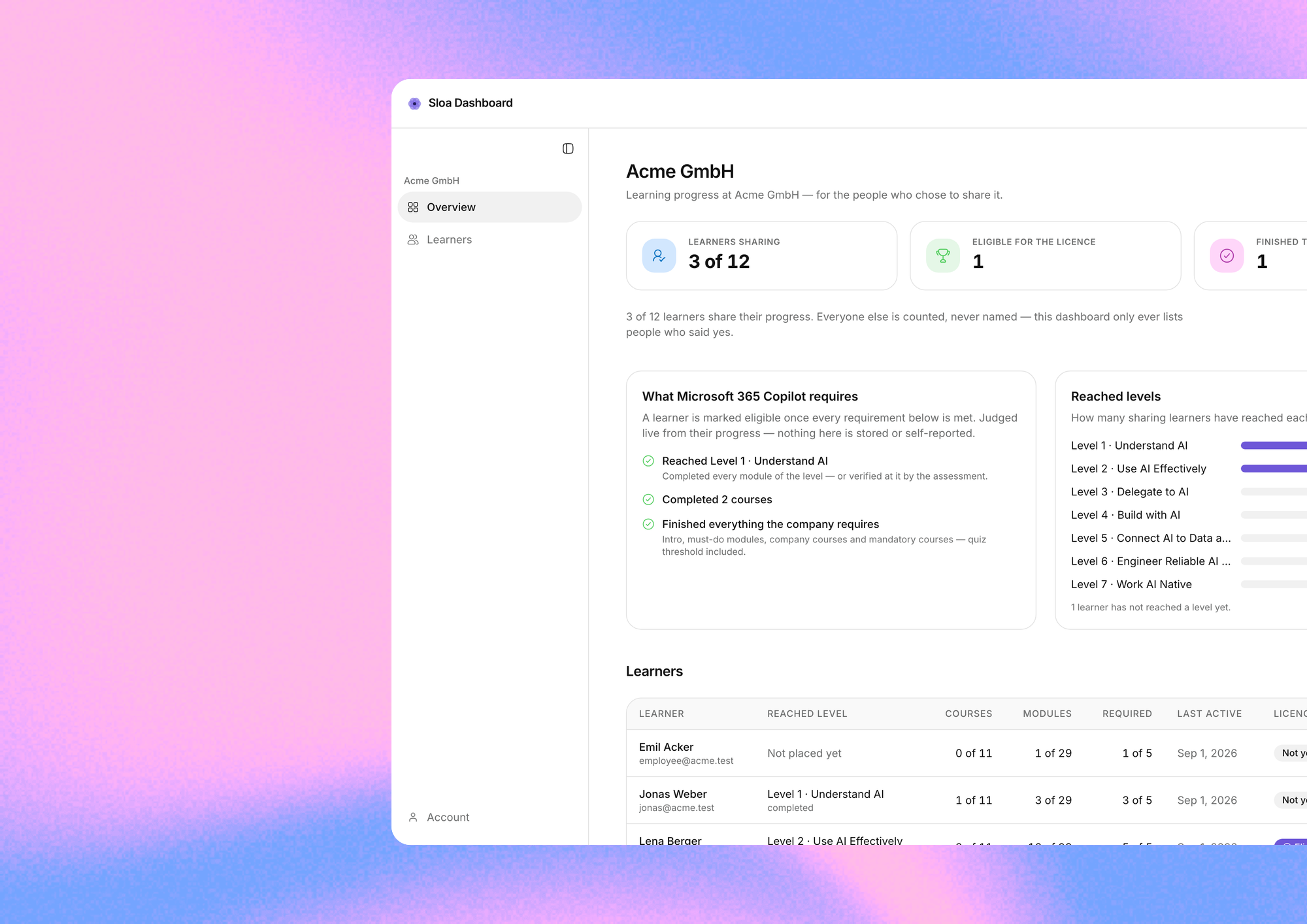
Build practical AI capabilities across teams with learning paths adapted to roles, use cases and company context. The underlying competencies stay consistent; the examples, exercises and terminology become specific to your organization.
How is progress measured?
Progress based on capability. Sloa measures what learners understand and can apply—not how much content they consume. Nobody is pushed through modules they do not need in order to move a completion bar.
How do you handle privacy and security?
Designed for European organizations with GDPR-conscious data handling, controlled access and organization-specific learning environments.
Do learners follow a fixed curriculum?
No. A structured competency framework defines where learners should arrive, and an adaptive system decides the most effective route for each person based on prior knowledge, role, technical depth and performance.
What does a learner actually do in Sloa?
Read concise explanations, work through diagrams and simulations, and practise directly with AI on real tasks — improving prompts, analyzing documents, evaluating output or building a simple workflow — with feedback at each step.
Can Sloa help us implement use cases we have already identified?
Sloa builds the internal capability to understand a use case, assess feasibility, structure the project and recognise its risks and limits. It closes the skills gap that usually blocks implementation.
AI capability keeps moving. Sloa keeps adapting, so what you learn stays useful.